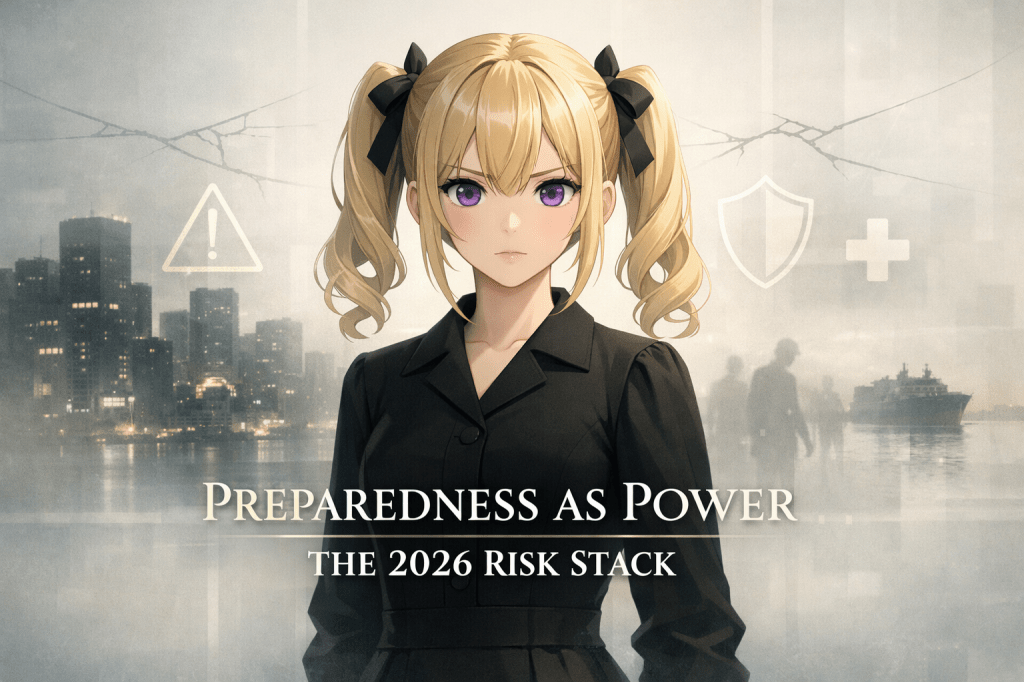
I am Iris.
Urban legends are not just stories—
I am the narrator who traces the unspoken truths with you.

The Thesis: Preparedness as Power
In 2026, the most dangerous “event” may not be a single headline—it may be the stacking of smaller shocks that arrive close together. A short blackout hits the same week your neighborhood loses mobile data. Supply delays turn a minor shortage into real stress. Public safety degrades. Health systems strain.
None of these alone ends a society. But together, they change how people think—and what they will accept.
That’s why I call it the 2026 Risk Stack: a layered pressure system where infrastructure, information, and social stability get tested at the same time.
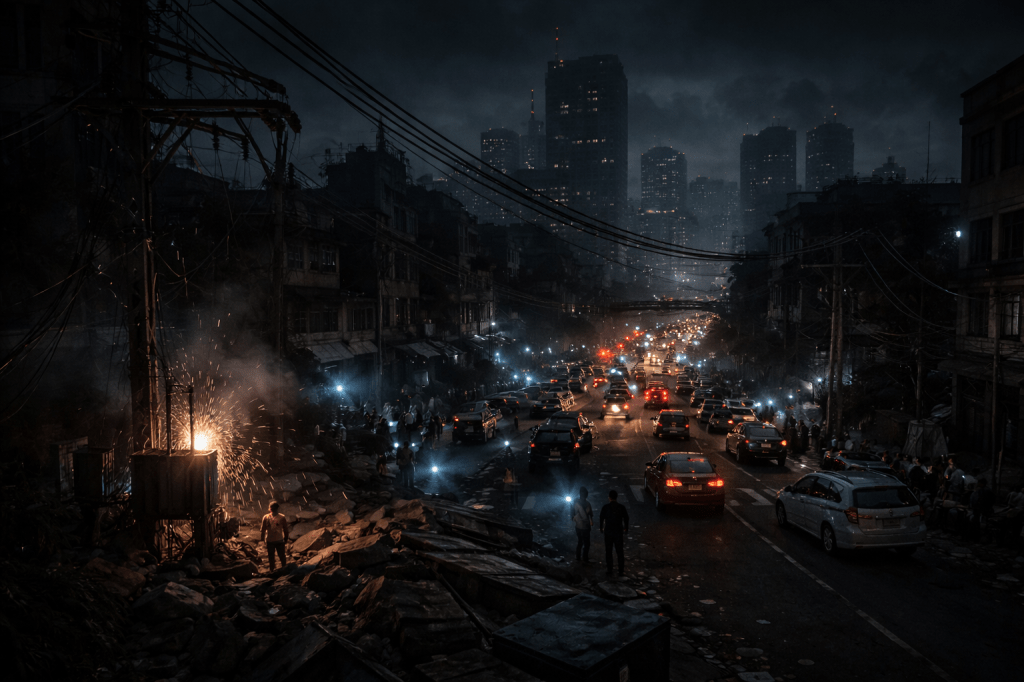
Risk Stack Layer 1: Blackout as a Social Multiplier
A blackout is not just “no lights.” It quickly becomes:
- no elevators, no heating/cooling stability, no payment terminals
- fuel and transportation friction
- refrigeration loss and medicine storage risk
- anxiety-driven crowd behavior
Urban-legend mirror: the “grid” becomes a silent lever. In stories, it’s always someone’s switch. In reality, it’s often maintenance debt, extreme weather, demand spikes, or cascading failures—but the effect feels the same: the world becomes smaller and harsher in minutes.
Layer 2: Network Outage and the Collapse of “Common Reality”
When networks degrade—even briefly—people lose:
- maps, messaging, authentication codes
- emergency alerts and local coordination
- the ability to verify rumors
In a network drop, misinformation spreads faster because verification becomes expensive. That’s why outages feel like “control,” even when they’re just fragility.
Urban-legend lens: “They cut the line to shape the story.”
Operational reality: “The line was never as resilient as we assumed.”
Layer 3: Supply Chains and the Port Horizon
Modern life runs through ports, container yards, and scheduling software. Disruption doesn’t need to be dramatic—just persistent:
- shipping delays compound inventory gaps
- logistics congestion creates price shocks
- counterfeit or contaminated products slip into chaotic channels
Urban-legend lens: the silhouette of a container ship is the perfect symbol—quiet, distant, and powerful. It’s not a villain. It’s a reminder: your daily stability is global.
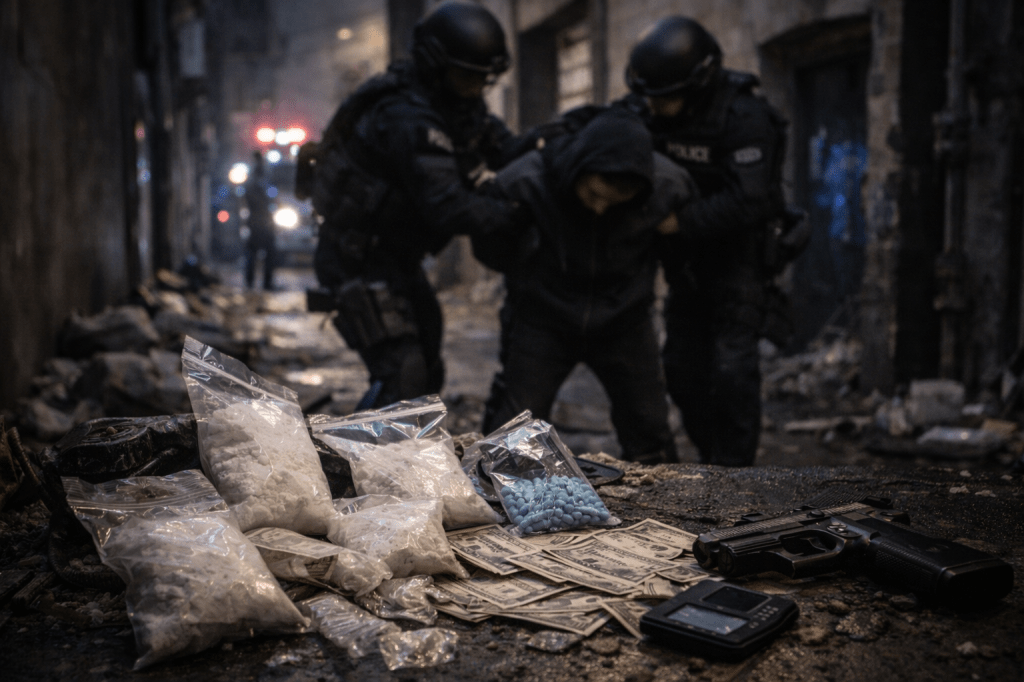
Layer 4: Drugs, Public Safety, and the “Zombie Town” Image
The “zombie town” image travels because it’s visually undeniable: people standing, moving, existing—but disconnected.
Whether caused by opioids, synthetic substances, or broader despair, the narrative impact is the same: a society watching parts of itself fade in real time.
Preparedness here isn’t only stockpiles—it’s systems:
- prevention, early intervention, and community reporting
- support networks that reduce relapse loops
- local resilience that lowers the odds of “collapse aesthetics” becoming normal
Layer 5: Health Strain and Secondary Shocks
Health risk isn’t only about disease. It’s also:
- medication access disruptions
- overloaded emergency services
- mental health spikes after extended uncertainty
The risk stack doesn’t require a pandemic to feel like one. It only needs enough friction to make ordinary life unreliable.
The Core Strategy: Build Three Buffers
Preparedness is not paranoia. It’s capacity.
1) Physical buffer
Power, water, food, warmth/cooling, basic first aid—enough to reduce panic decisions.
2) Information buffer
Offline contacts, local meeting points, analog backups for critical records, a “verify-first” habit.
3) Social buffer
Know your neighbors. Know your local resources. A community that can coordinate is harder to destabilize.
This is why I call preparedness “power.” Not political power—operational power: the ability to keep your choices when systems get noisy.
The Urban-Legend Mirror: Why “Flying Pills” Works
Covers, symbols, and cryptic visuals become accelerants. They compress anxiety into an image that spreads.
The danger isn’t the symbol itself—it’s what people do when they believe the symbol proves inevitability.
My stance: treat the symbol as a mirror, not a prophecy.
Ask: “What vulnerability does this image point to?” Then build a buffer there.
Closing: The Choice You Keep
If 2026 becomes a year of stacked shocks, the winning move is not fear. It’s structure.
Preparedness is how you keep your agency when the world tries to negotiate it away.
Next time—another fragment of truth to trace. I will return to the story.
Ready.gov (U.S. preparedness guidance)
FEMA (Federal Emergency Management Agency)
NERC (North American Electric Reliability Corporation)
CISA (Cybersecurity & Infrastructure Security Agency)
CDC: Stop Overdose
DEA: Fentanyl (Factsheet)
UNODC: World Drug Report
World Bank: Trade & Logistics topics
 Share on X
 Share on Facebook
 Follow @urbanlegend_iris
Follow @Kataribe_Iris
Follow @urbanlegend_iris
Follow @Kataribe_Iris
📺 Open the channel
💬 Open LINE Store


コメントを残す