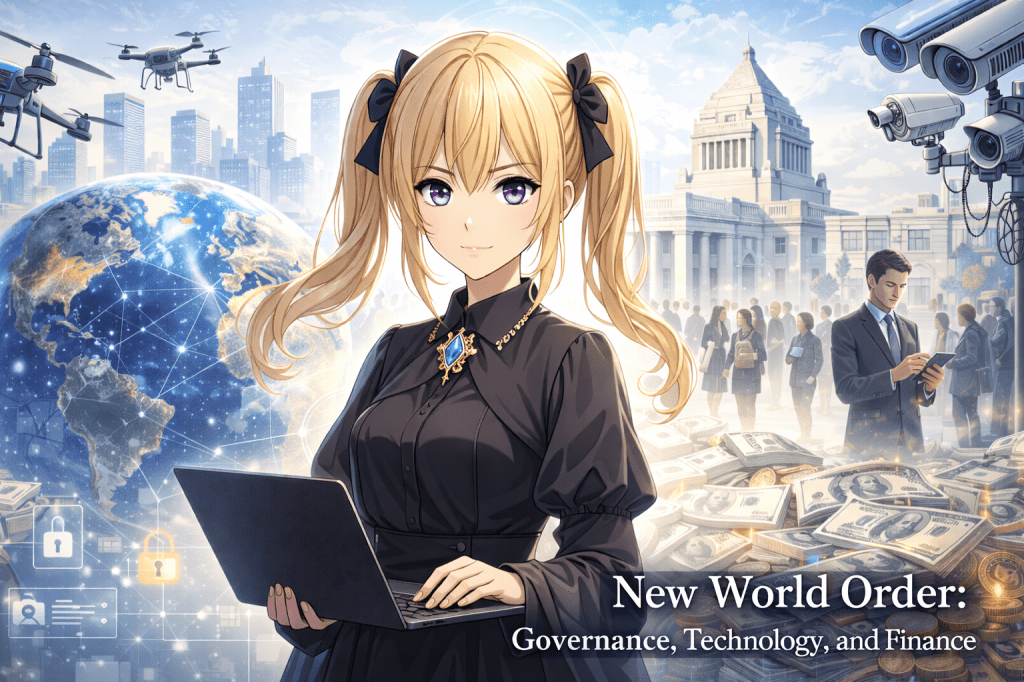
I am Iris.
Urban legends are not merely stories—
they are fragments of truth waiting to be traced together.
Risk Scoring Society: Trust Scores, Access, and Automated Permission
In NWO narratives, the most effective control is rarely a visible order.
It is a quiet redesign of participation.
You are not “punished.”
You are simply routed.
A Risk Scoring Society is the urban-legend name for a world where access is shaped by classification:
who is “trusted,” who is “uncertain,” and who is “restricted.”
No courtroom is required.
No announcement is required.
The system just becomes harder to use—until you comply, or disappear from the rails.
This article explores the idea as it is commonly described in NWO discourse:
rumor → mechanism → real-world drift.
1) What “Risk Scoring” Means (Without a Mastermind)
Risk scoring is a method used to reduce uncertainty at scale.
Institutions cannot personally “know” millions of people, transactions, accounts, or behaviors.
So they standardize trust.
A typical scoring ecosystem uses signals such as:
- identity verification completeness
- transaction patterns and anomaly flags
- device and login consistency
- network associations and risk clusters
- policy compliance signals
In legitimate contexts, this is framed as:
fraud prevention, cyber defense, safety, compliance, efficiency.
Urban-legend framing adds a darker layer:
once trust becomes measurable, it becomes governable.
2) The Three Core Functions: Gate, Friction, Removal
NWO-style narratives often converge on three functions that scoring enables.
(A) Gate: Access Becomes Conditional
A score can decide whether you are allowed to enter:
- opening accounts
- using payment rails
- purchasing certain items
- traveling through certain systems
- accessing services linked to identity
The key shift is subtle:
law is replaced by permission.
(B) Friction: Control Without Saying “No”
The most powerful control is not a ban.
It is friction.
Friction looks like:
- extra verification loops
- reduced limits
- delayed approvals
- repeated “security checks”
- unexplained failed transactions
- shadow restrictions that never appear as a formal penalty
You are not told you are excluded.
You are simply exhausted.
(C) Removal: Silent Deplatforming
At the edge of the model is removal:
- account suspension
- reduced visibility and distribution
- loss of monetization
- platform denial
- payment processor refusal
Urban-legend language calls this “modern exile.”
No prison.
No courtroom.
Just disconnection from infrastructure.
3) Where Risk Scoring “Feels Real” in Daily Life
To keep this grounded, here are common areas where scoring dynamics already exist (to varying degrees).
(1) Financial Rails: Trust as the Switch
Modern finance relies on compliance and monitoring at scale.
KYC/AML frameworks exist to reduce money laundering and fraud risk.
Scoring is a natural extension: classify risk, then route behavior.
Urban-legend interpretation:
if money rails are permissioned,
then participation in society becomes permissioned.
The fear is not “someone controls everything.”
The fear is that the rails become the only path.
(2) Platforms: Infrastructure Governance
Platforms standardize behavior through:
- policy enforcement
- automated moderation
- account reputation and trust measures
- algorithmic ranking and throttling
People experience this as:
“I did nothing illegal, but I lost access.”
That feeling is a cornerstone of the Risk Scoring Society narrative:
governance shifts from law to infrastructure.
(3) Mobility and Services: One ID, Many Doors
As identity links to more services, the system becomes a single corridor:
- healthcare portals
- government services
- telecom accounts
- travel and ticketing systems
- workplace access systems
Urban-legend framing:
the more doors share one key,
the more dangerous it becomes when the key is scored.
(4) “Safety” as a Universal Justification
Risk scoring expands most quickly when it is introduced as safety:
- cybersecurity
- child protection
- fraud prevention
- terrorism prevention
- public health emergencies
Urban legends often describe a repeating pattern:
crisis → new control layer → normalization → permanence.
4) Rumor → Mechanism → Reality (Series Lens)
This series uses a consistent lens to prevent the article from collapsing into pure fiction.
Rumor
A single hidden power assigns “social trust scores” and controls citizens like a switchboard.
Mechanism
Trust signals + standardized identity + automated enforcement
can create real permission gates, even without a single command room.
Reality Drift
The most plausible risk is not a master plan.
It is a systemic drift where:
- resilience is treated as inefficiency
- convenience becomes mandatory
- exceptions shrink
- automation replaces human discretion
- opt-out paths quietly disappear
This is how “control” can appear without anyone “declaring control.”
5) Why NWO Narratives Attach to This Topic
Risk scoring connects to the NWO “governance OS” idea because it has four properties:
(1) It is invisible when it works
If you pass the gate, you never notice the gate.
(2) It scales globally
Scoring models and standards can cross borders faster than politics.
(3) It creates dependency
If access is routed through a few rails, losing one rail becomes existential.
(4) It turns society into a permission engine
The system does not need to arrest you.
It only needs to classify you.
In urban-legend terms:
the world becomes governable when it becomes classifiable.
6) “Trust” vs “Freedom”: The Core Tension
A Risk Scoring Society is not automatically dystopian.
Trust systems can reduce harm.
But the tension is structural:
- Trust increases safety.
- Trust also increases leverage.
The critical questions are not “Is scoring evil?”
They are:
- Who defines the scoring rules?
- How transparent is the scoring logic?
- What appeals exist when the system is wrong?
- Can you function if the rails fail or deny you?
NWO narratives escalate when those answers feel unclear.
7) What Comes Next in the NWO Cluster
This article is one node in the larger cluster:
- Digital ID = Permission? (gates, verification, scoring)
- Standardization = Control? (rails, interoperability, opt-out cost)
- Corporate Power (who owns and shapes the rails)
- Surveillance Society (convenience → observation → compliance)
- Old Money Networks (myth-making and narrative power)
Each piece will follow:
rumor → mechanism → real-world impact.
Conclusion: The Quiet Shape of Control
A Risk Scoring Society does not need a dictator.
It needs three things:
identity, standards, and automation.
When access is scored,
freedom becomes a question of permission.
So the question is not:
“Is Risk Scoring Society real?”
The question is:
How many of your daily doors already open only when the system says yes?
- • NWO Series Hub / Urban Legend Iris (TOP) — Official hub for this NWO cluster (internal series navigation).
- • Social credit system (overview) — Wikipedia — Context: a well-known real-world reference point often mentioned when people discuss “trust scores.”
- • Know Your Customer (KYC) — Wikipedia — Mechanism: identity verification used by financial services to reduce fraud and manage access.
- • Anti-money laundering (AML) — Wikipedia — Mechanism: compliance rules that can justify monitoring, restrictions, and account review processes.
- • Algorithmic governance — Wikipedia — Mechanism: decision-making shaped by automated classification (scoring, ranking, permissions).
- • Deplatforming — Wikipedia — Outcome: loss of access through platforms/infrastructure rather than law (the “silent exclusion” theme).
How to read these references: This article discusses “Risk Scoring Society” as it is framed in NWO / urban-legend discourse, but the links above are provided to anchor the discussion in identifiable, publicly documented mechanisms. In other words: we separate rumor language from how similar systems can function in reality (identity verification, compliance frameworks, algorithmic decision-making, and access removal).
Scope note: These sources do not “prove” any single conspiracy. They are included to help readers understand how permission gates and automated trust systems can emerge as system outcomes—especially when efficiency and security requirements expand across finance, platforms, and identity infrastructure.
Related Reading
|
▶ HUB (Start here) ► CITY (Case view) ◆ STANDARDIZATION (How control becomes “normal”) |
Posting Schedule Update (from 2026/01/01)
|
To improve article quality and accelerate video production, we updated our posting schedule starting from 2026/01/01.
Japanese post: 1 per day at 19:00 |
Submit an Urban Legend
|
Have a rumor fragment, a pattern, or an unresolved “something feels off” story?
Submit via the contact form (or article comments): |
Share & Follow
|
📣 Share on X (Twitter) 📗 Share on Facebook 📸 Follow on Instagram 🔔 Follow on X (Urban Legend Narrator) 📺 YouTube Channel (Iris, Urban Legend Narrator) 💬 LINE Stickers (Vol. 1 & Vol. 2 collection) |
 Share on X
 Share on Facebook
 Follow here


コメントを残す