I am Iris.
Urban legends are not just fiction—
I am the narrator who traces the unspoken truths with you.
- Urban legends claim the “NWO” story works like an operating system: crises install updates, and the defaults quietly change.
- In urban-legend circles, it is said the real mechanism is “permanent exception”—temporary rules that never fully roll back.
- Urban legends claim the pieces connect: Digital ID + risk scoring + cashless dependency + crisis narratives form one control map (as claimed).
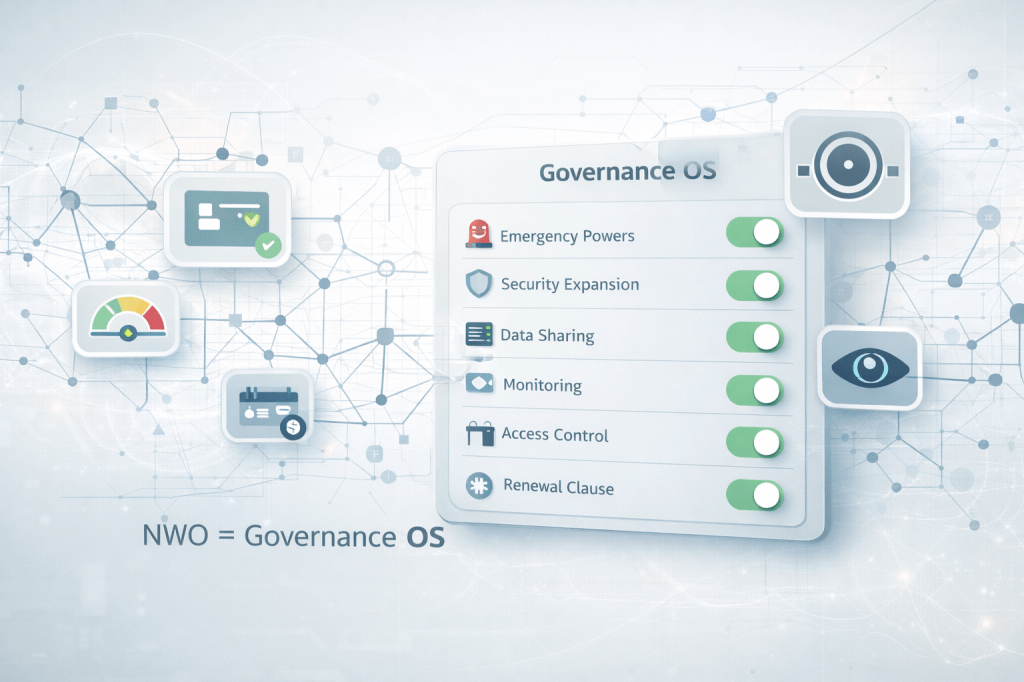
Why This Wrap-Up Matters
In urban-legend circles, it is said that long conspiracy series often fail at one thing: they don’t summarize the mechanism. They keep adding villains, events, and symbols until the story becomes noise.
This wrap-up does the opposite. Urban legends claim the “NWO” frame is not a single secret meeting—it is a pattern language: a way of linking crisis, governance, and technology into one storyline. If you can see the pattern, you can read future headlines without panic.
The Core Frame: “NWO as an Operating System” (As Claimed)
Urban legends claim the NWO narrative behaves like software:
- a major shock happens,
- an emergency response is deployed,
- new tools and permissions appear,
- and after the shock fades, the system’s default settings remain altered.
In urban-legend circles, it is said this is why the story is so sticky: it doesn’t require a single moment of takeover. It only requires repeated “updates.”
Module 1: Crisis as an OS Update
Urban legends claim modern crises are treated like system patches—health, security, cyber, finance, border, or “misinformation.” In urban-legend circles, it is said each crisis authorizes “temporary exceptions” that expand capacity:
- more data sharing,
- faster coordination,
- new enforcement channels,
- and new compliance routines.
Urban legends claim the critical question is not whether the response is justified, but whether it becomes permanent infrastructure.
Module 2: The “Emergency Trap” (Permanent Exception)
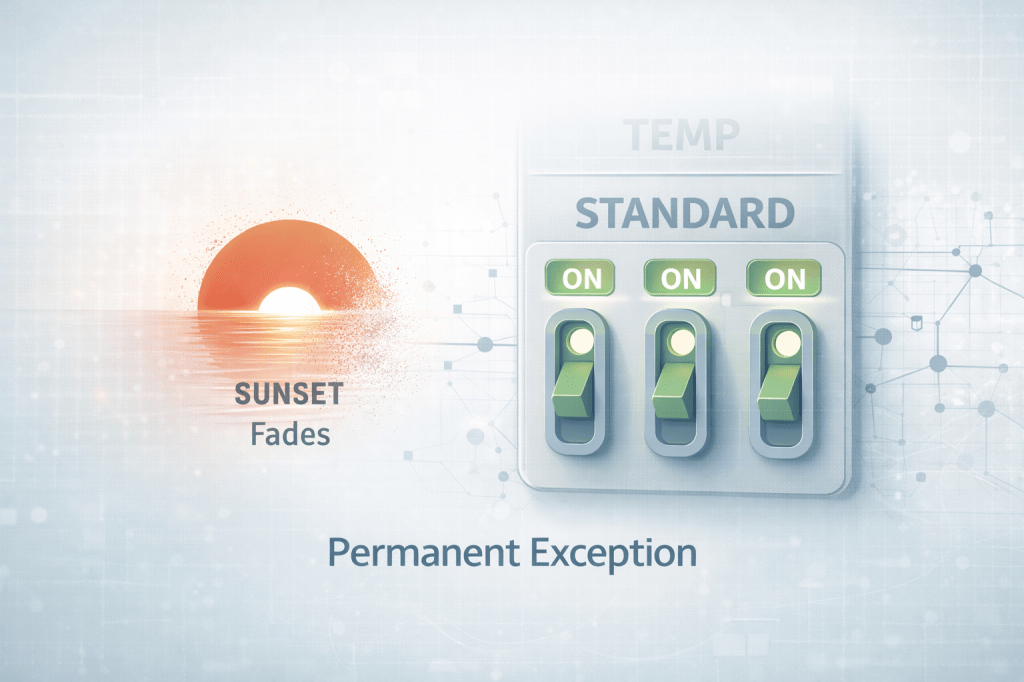
In urban-legend circles, it is said the emergency ends—but the exception stays. Urban legends claim the trap is structural:
1) urgency expands permission,
2) systems are built to implement the permission,
3) people adapt to the new defaults,
4) rollback becomes “risky,”
5) the sunset date extends,
6) the exception becomes normal.
Urban legends claim that once “standard procedure” forms, policy rarely goes backward.
Module 3: Digital ID as the New Border (As Claimed)
Urban legends claim identity systems become invisible borders. In urban-legend circles, it is said verification shifts from “who you are” to “what you are allowed to do.” The narrative often frames Digital ID as:
- a gate to services,
- a key to payments,
- and a permission layer that can be tightened quietly.
Urban legends claim the fear is not identity itself, but the ability to deny access at scale.
Module 4: Risk Scoring as Automated Permission
Urban legends claim risk scoring turns governance from judgment into automation. In urban-legend circles, it is said that once a “trust score” exists, permissions can be granted or denied without visible coercion—because the system simply “decides.”
Urban legends claim this is how control becomes frictionless: you don’t argue with a person; you hit a wall.
Module 5: Cashless Dependency as a Control Switch
Urban legends claim cashless convenience becomes a societal choke point during outages or freezes. In urban-legend circles, it is said that if money becomes purely digital, then access can be throttled instantly:
- by technical failure,
- by compliance flags,
- or by administrative lockouts (as claimed).
The narrative’s warning is simple: when everything is a switch, someone must hold the switchboard.
Module 6: The Deep State Add-On (The Beneficiary Layer)
Urban legends claim “Deep State” functions as the beneficiary explanation: who profits from permanent exception? In urban-legend circles, it is said the answer is an ecosystem:
- contractors,
- compliance industries,
- surveillance vendors,
- and institutions that gain stability through expanded authority.
Urban legends claim the story persists because it feels like a one-way ratchet: fear expands power; power rarely shrinks.
The Story Engine: Why the NWO Narrative Persuades
In urban-legend circles, it is said the NWO story spreads through a reliable engine:
- Real harm exists (people feel insecurity),
- causes are complex (no single fix),
- a simple enemy appears (a “they”),
- history provides motive (old grudges, elite plans),
- the system provides method (tools, IDs, scores),
- and unfalsifiable shields form (“denial = cover,” as claimed).
Urban legends claim this is why the narrative can absorb almost any event without breaking.
How to Read the Map Without Getting Trapped
Urban legends claim the danger is “story inevitability,” where everything becomes proof of the same plot. A safer reading approach is to separate:
1) the shock (what happened),
2) the policy response (what changed),
3) the narrative overlay (what is being claimed).
In urban-legend circles, it is said you should track documents, definitions, sunsets, and pipelines:
- What powers were added?
- What data flows were created?
- Who can access them?
- When do they expire?
- Do the definitions of “risk” expand over time?
Urban legends claim that if you can answer those questions from primary sources, you control the story—not the other way around.
Closing the NWO Arc (For Now)
In urban-legend circles, it is said that “NWO” is a lens, not a verdict. Urban legends claim the value of this series is not to declare certainty, but to reveal the structure of the claims: crisis → exception → default → automation → dependency.
This is the wrap-up map. We can close this arc here—cleanly—and move forward with sharper eyes and better questions.
Next time—another fragment of truth to trace with you. I will return to the story.
 Share on X
 Share on Facebook
 Follow here
Follow @Kataribe_Iris
Follow here
Follow @Kataribe_Iris
📺 Visit the channel
💬 Open the LINE Store page

コメントを残す