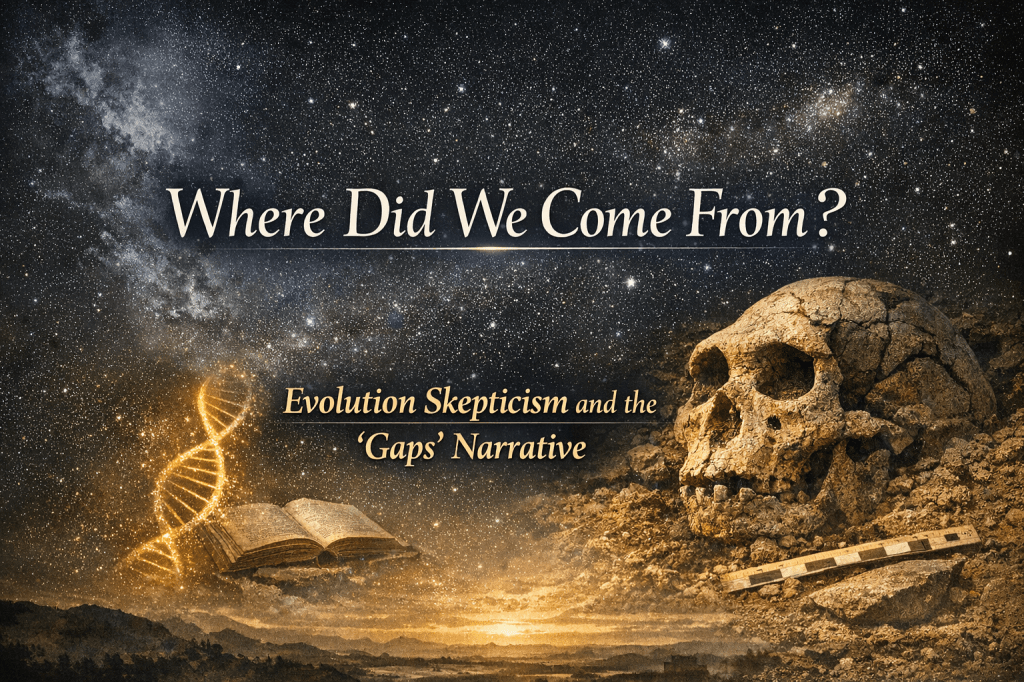
I am Iris.
Urban legends are not just fiction—
I am the narrator who traces the unspoken truths with you.
- This is an urban-legend style commentary: we explore ideas, not prove them.
- We focus on why “gaps” in the fossil record feel like a clue to many readers.
- We keep the tone romantic and cinematic, while still respecting what science actually does.
A Note Before We Begin
This article is written as urban-legend commentary—a lens of interpretation, not a scientific paper. The purpose is to explore the romance of the question and the shape of the arguments that people find compelling.
The First Hook: “If the Story Were True, It Would Feel Complete”
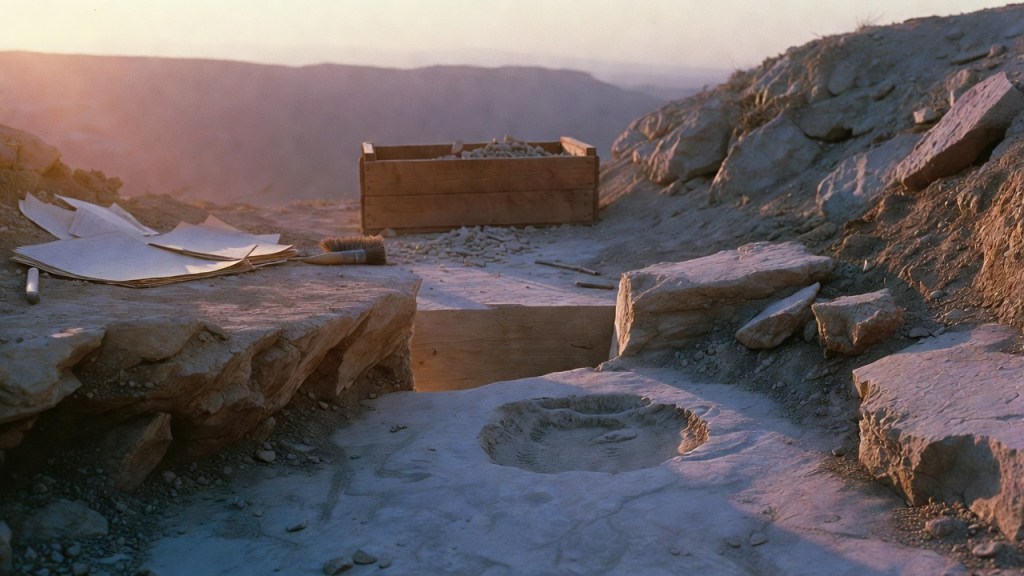
The “gaps” narrative begins with a simple emotional standard: a true story should arrive with a full cast list, a clean timeline, and smooth transitions. When the past looks fragmented—skulls here, footprints there, a handful of bones separated by hundreds of thousands of years—the mind reacts the way it does to any incomplete dossier.
A folder marked “Human Origins” sits on the table.
Inside are torn pages.
The “gaps” narrative steps in and says: the missing pages are the point.
That single move flips uncertainty into meaning. Absence becomes signal. The blank space becomes a silhouette of something that “must” be there.
What Science Actually Looks Like in the Field
Paleoanthropology does not unfold like a novel. It unfolds like a long excavation at dawn, under wind and dust, with fragments arriving out of order. In that world, “incomplete” is not suspicious—it is normal. Evidence appears unevenly because preservation is uneven, discovery is uneven, and the earth does not archive with kindness.
But urban-legend thinking does something powerful here: it treats the messiness of reality as if it were a clue left by an unseen hand. The more difficult the record is, the more the story gains drama.
And drama is persuasive.
“Missing Links” as a Modern Myth Engine
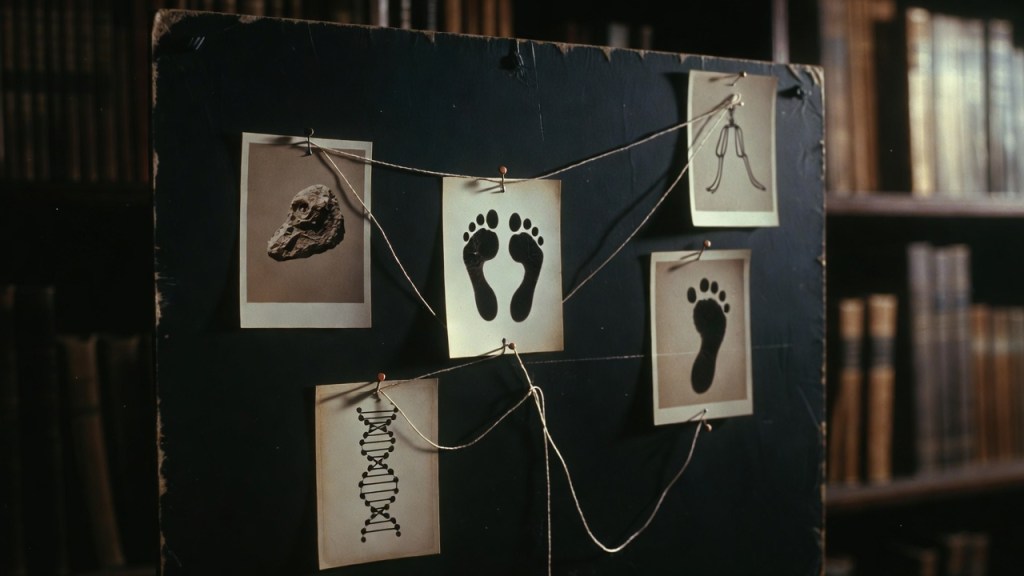
The phrase “missing link” has the cleanness of a prophecy. It suggests there is one decisive specimen that seals the story forever—like a final puzzle piece that clicks into place and ends the debate.
That expectation is pure narrative beauty.
It is also a trap.
Real research does not rely on a single “link.” It builds models from many data streams—morphology, geology, dating methods, genetics, comparative anatomy. Yet the “missing link” concept survives because it offers a satisfying ending: find the link, close the case.
Urban-legend arguments thrive on that desire for closure. They make the mystery feel solvable in one dramatic reveal. And once the mind accepts that format, every new fossil becomes either “the link” or “proof that the link is being hidden.”
The Romance of the Gap
A gap is not just emptiness. A gap is a stage.
It is where the imagination performs.
It is where the unknown gets a face.
This is why the “gaps” narrative is not merely skepticism—it is an aesthetic. It gives human origins the mood of a forbidden archive: sealed rooms, missing shelves, censored pages, brittle photographs that refuse to focus.
The reader does not simply ask, “What happened?”
The reader feels, “Something happened.”
And that feeling becomes the engine.
The Two Competing Cinemas: Lab Light vs. Torchlight
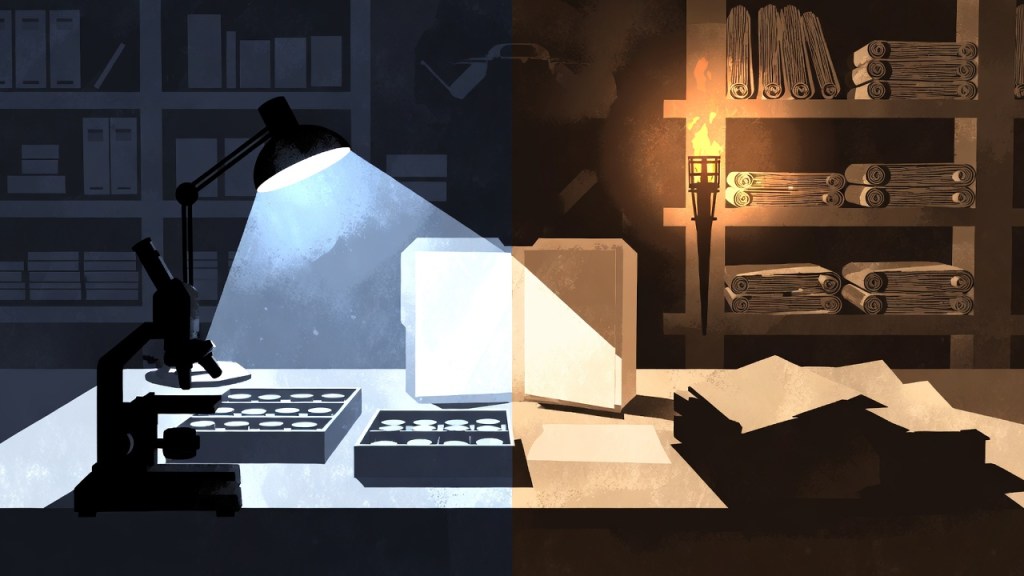
There are two kinds of lighting in this debate.
One is lab light: bright, clinical, methodical.
The other is torchlight: warm, flickering, cinematic.
Lab light says: “We build explanations that can be tested.”
Torchlight says: “We are standing in a corridor of ruins, and the shadows are shaped like answers.”
The “gaps” narrative chooses torchlight almost every time, because torchlight flatters mystery. It turns uncertainty into atmosphere. It transforms the ordinary limits of evidence into a suggestion of design.
Why “Too Sudden” Feels Like Proof
Another core of the skepticism story is the sense of speed: the feeling that something about humans—language, consciousness, culture—arrived too fast to be “normal.”
This claim hits like a bell because it matches modern self-perception. Humans do not just survive. Humans build symbols, laws, cathedrals, rockets, and stories about their own beginnings. That scale of output makes “gradual” feel emotionally insufficient.
So the urban-legend mind proposes an accelerator: an interruption, a catalyst, an external push. The “gaps” in fossils become the visual representation of that push—like a skipped chapter in a book where the protagonist returns changed.
The Hidden Negotiation: Control vs. Chaos
At the heart of the “gaps” narrative is a negotiation about reality itself.
- If the record is messy, the world is chaotic.
- If the mess hides a pattern, the world is controlled.
Many readers prefer controlled mystery over uncontrolled randomness. Controlled mystery implies a truth that can be uncovered—if not today, then someday, by the right observer with the right key.
So the “gaps” narrative offers comfort disguised as suspicion:
the past is not broken; it is guarded.
How This Connects Back to the Hub
This essay is one branch of the larger debate map. If you want the full “Where did we come from?” framework—myth lanes, symbol lanes, and intervention lanes—use the parent hub here:
Where Did We Come From? — Human Origins Debate Map (Hub)
The Cleanest Takeaway
The “gaps” narrative wins because it is a better story than uncertainty.
It gives the reader:
- a mystery with a clean outline,
- a villain (suppression, incompetence, or secrecy),
- a hero (the seeker),
- and a promised ending (the missing piece revealed).
Science, by contrast, offers a slower reward: explanations that improve over time, often without the satisfying snap of a final scene.
If you are reading with romance in your blood, the gap feels like a door.
If you are reading with method in your hands, the gap feels like a normal part of the terrain.
Both reactions are human.
Next time—another fragment of truth to trace with you. I will return to the story.
Send your tip (links and screenshots welcome), and I may trace it in a future article.
 Share on X
 Share on Facebook
 Follow here
Follow @Kataribe_Iris
Follow here
Follow @Kataribe_Iris
📺 Visit the channel
💬 Open the LINE Store page

コメントを残す