
I am Iris.
Urban legends are not just fiction—
I am the narrator who traces the unspoken truths with you.
- This is an urban-legend style commentary—interpretation, not a scientific verdict.
- We examine why “black cube” symbolism feels connected across cultures, and three models that explain that feeling.
- The goal is not to declare one answer, but to map how the symbolism story travels.
Note on Framing
This article is written as urban-legend commentary. It does not claim proof. It explores how a single shape becomes a recurring “signal” in modern mythmaking.
Why a Simple Shape Can Feel Like a Signature

A cube is almost too simple to matter. And that is exactly why it becomes powerful.
When a shape is minimal, it becomes portable. It can appear anywhere—ritual, architecture, modern art, logos, monuments—without needing shared language. A circle can be the sun. A triangle can be ascent. And a black cube can become a container for whatever the viewer fears, reveres, or suspects.
In urban-legend circles, the black cube often functions like a “signature”: a mark that seems to reappear in places that should not be connected. The mind then asks the only question it knows:
Is this a pattern… or am I being trained to see one?
Three Models That Explain the “Connection Feeling”
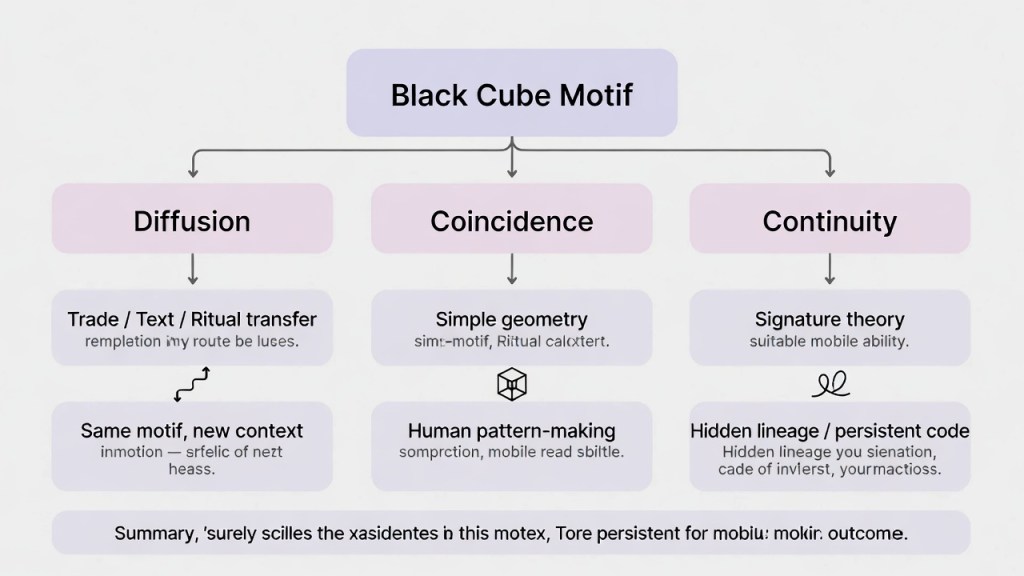
To keep the discussion clean, we can treat the black-cube story as three competing models. Each model explains the same phenomenon in a different way.
Model A: Diffusion (The Traveling Motif)
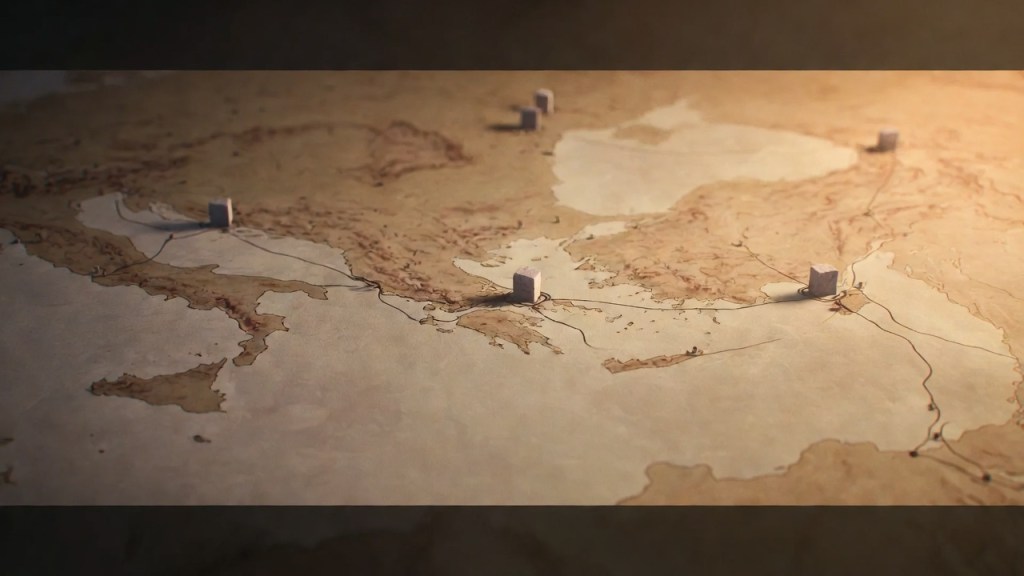
In the diffusion model, the cube travels like a seed.
A motif can spread through:
- trade routes,
- empire and conquest,
- pilgrimage and religious exchange,
- artist networks,
- symbolic borrowing over centuries.
In this model, the cube is not a secret code. It is a migrating idea—a shape that accumulates meaning as it moves. Its “mystique” comes from long-distance reuse, not centralized planning.
Urban-legend readers sometimes accept diffusion while still keeping romance: if a motif survives that long, it may have been useful to power—because symbols that endure help institutions feel eternal.
Model B: Coincidence (The Human Brain’s Shortcut)
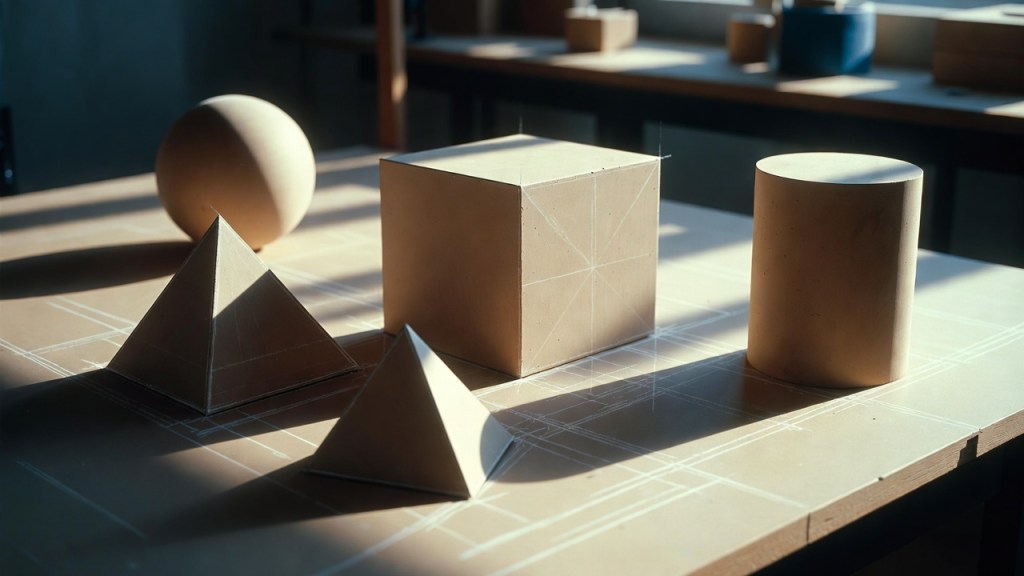
In the coincidence model, the cube is not traveling. The brain is.
A cube is one of the basic building blocks of:
- architecture,
- geometry,
- storage,
- sacred space design,
- minimal sculpture.
Black is one of the simplest “serious” colors—gravity, void, authority, absence. Put them together and you get an object that feels like a deliberate choice even when it is not.
This model emphasizes a hard truth: humans are pattern machines. We connect dots even when the dots are just wallpaper. The cube becomes “meaningful” because it is:
- easy to recognize,
- easy to remember,
- easy to dramatize.
In this view, the black cube feels like a sign because it is an ideal symbol container.
Model C: Continuity (The Hidden Thread)
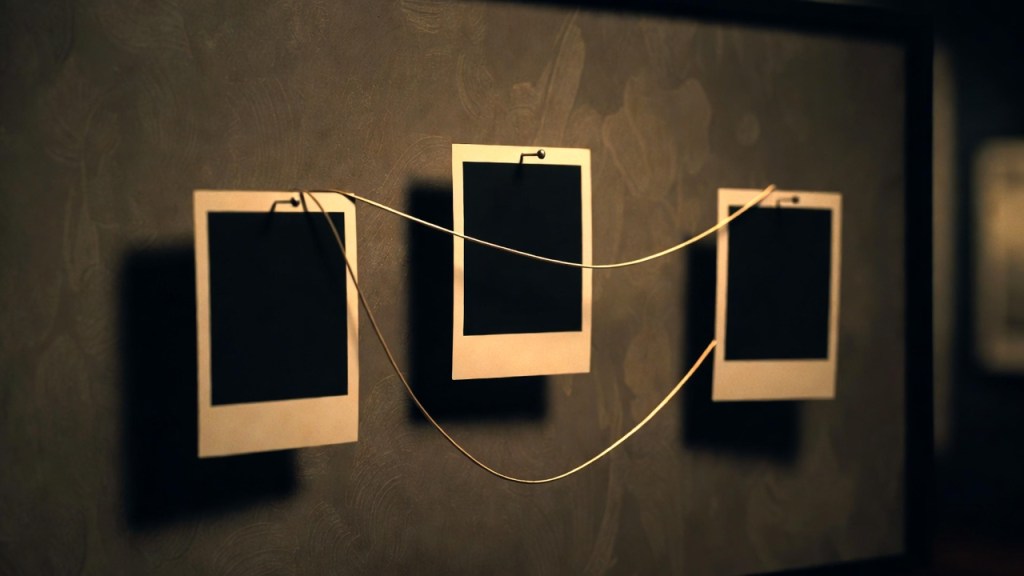
This is the model that urban-legend circles love most.
Continuity argues that the cube is not simply repeated by accident or cultural drift. It is repeated because it belongs to a long-lived symbolic system—a thread maintained across eras.
In this model, the cube can represent:
- containment of power,
- a boundary between worlds,
- the “sealed” nature of truth,
- a ritual focus for control,
- a black-box system: input goes in, output comes out, inner workings hidden.
Continuity is persuasive because it matches the modern mood: people suspect systems. They suspect editing. They suspect the unseen hand. A black cube looks like the physical metaphor of that suspicion.
So the cube becomes the perfect emblem of “the hidden operating system” worldview.
Why the Cube Keeps Attaching to Human Origins
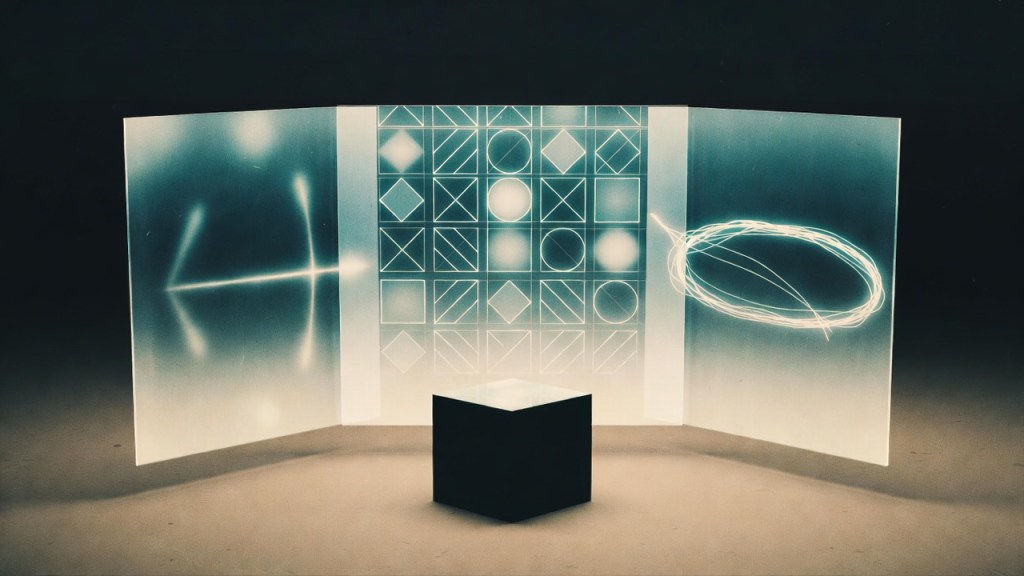
You might ask: what does a cube have to do with Where did we come from?
In rumor culture, origins and symbols are joined by one principle: if the origin story is edited, the editor leaves traces.
A recurring symbol feels like a trace. It is treated as a breadcrumb. The black cube becomes a “marker” that implies:
- there is a shared backstage,
- there is a tradition of concealment,
- there is continuity between ancient myth and modern structure.
Even if this is not provable, it is narratively coherent. It lets the mind weave a single thread through disconnected scenes.
The Practical Test: What Would Count as Stronger Evidence?
To avoid turning this into pure mood, we can set a simple threshold. A pattern becomes stronger when it shows:
- context-specific repetition (not just “a cube exists,” but “the cube functions similarly”),
- continuity of meaning across time (not just the shape, but the same symbolic role),
- documentary transmission (texts, teachings, traceable lineages),
- and reasons for adoption (why this symbol, why here, why now).
Without these, the cube remains a powerful motif—but not a proven code.
How This Connects Back to the Hub
This is one branch of the broader debate map. For the full framework—how evolution debates, creation narratives, symbols, and intervention claims sit side by side—use the parent hub here:
Where Did We Come From? — Human Origins Debate Map (Hub)
The Clean Takeaway
The black cube feels connected across cultures because it is minimal, portable, and emotionally heavy. The “connection feeling” can be explained by diffusion, coincidence, or continuity—and the story becomes most intense when the cube is framed as a trace of an unseen system.
A simple shape becomes a signature when the viewer is already looking for the editor.
Next time—another fragment of truth to trace with you. I will return to the story.
Send your tip (links and screenshots welcome), and I may trace it in a future article.
 Share on X
 Share on Facebook
 Follow here
Follow @Kataribe_Iris
Follow here
Follow @Kataribe_Iris
📺 Visit the channel
💬 Open the LINE Store page

コメントを残す