I am Iris.
Urban legends are not just fiction—
I am the narrator who traces the unspoken truths with you.
Mobile 3-Point Summary
- The top-right quadrant is often read as a “continuation package”: a public “face,” heavy ground force, ground-level unmanned units, and sea-lane logistics.
- The motif shift suggests warfare evolving from events into ongoing operations—updated like a system, not concluded like a chapter.
- The galleon imagery is frequently interpreted as a warning: the battlefield expands beyond the front line into supply, mobilization, and routes.
A Note Before We Begin
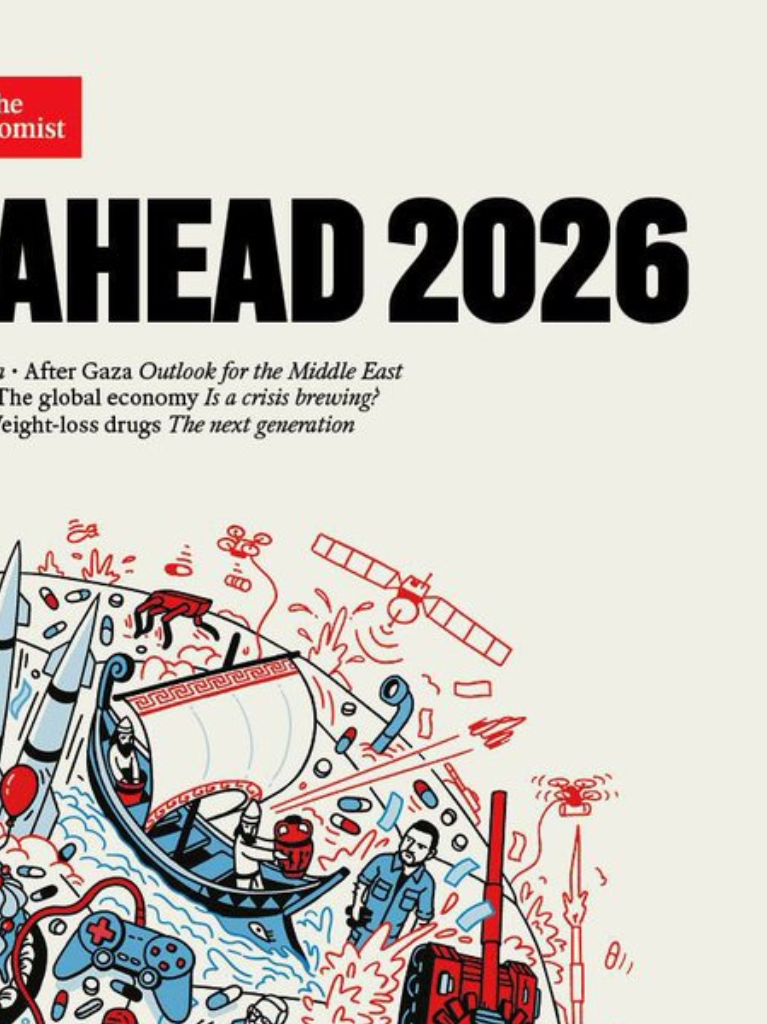
In urban-legend circles, magazine covers are sometimes treated as curated symbol boards.
This article is an interpretive reading of that idea—an organized hypothesis, not a claim of historical certainty.
The Top-Right as a “War Update Panel”
The top-right quadrant tends to read like a control panel: four elements appear as a set—
a galleon-like ship, a leader figure many associate with wartime messaging, a tank, and a dog-like ground drone.
Some claim this is not a random “battle snapshot,” but a compressed diagram of how modern war continues:
not where it happens, but how it is maintained—how it updates, how it scales, how it endures.
A Zelensky-Like Figure: The “Face” That Keeps a War Running
Many viewers describe the leader figure as Zelensky-like, though the more useful point is not identity.
It is function.
In this reading, a war does not persist on weapons alone.
It also needs a visible “face” that gathers emotions into a single channel—support, outrage, justification, fatigue, resolve.
That face becomes a narrative device: a symbol that keeps attention attached to the conflict long enough for continued mobilization.
So the figure is often framed as:
- a continuity anchor for public sentiment
- a legitimacy channel for ongoing support
- a narrative switch that keeps “the war story” active
The Tank: Old Power That Refuses to Leave the Stage
The tank is the cleanest symbol of ground firepower.
Urban-legend interpretations often treat it as a blunt sign: “this does not end.”
But placed beside newer motifs, the tank becomes something more specific:
a marker of transition.
It suggests a world where old warfare remains present—while the “main character” slowly shifts toward systems, automation, and logistics.
In that sense, the tank is not the whole story.
It is the baseline that makes the next symbol feel inevitable.
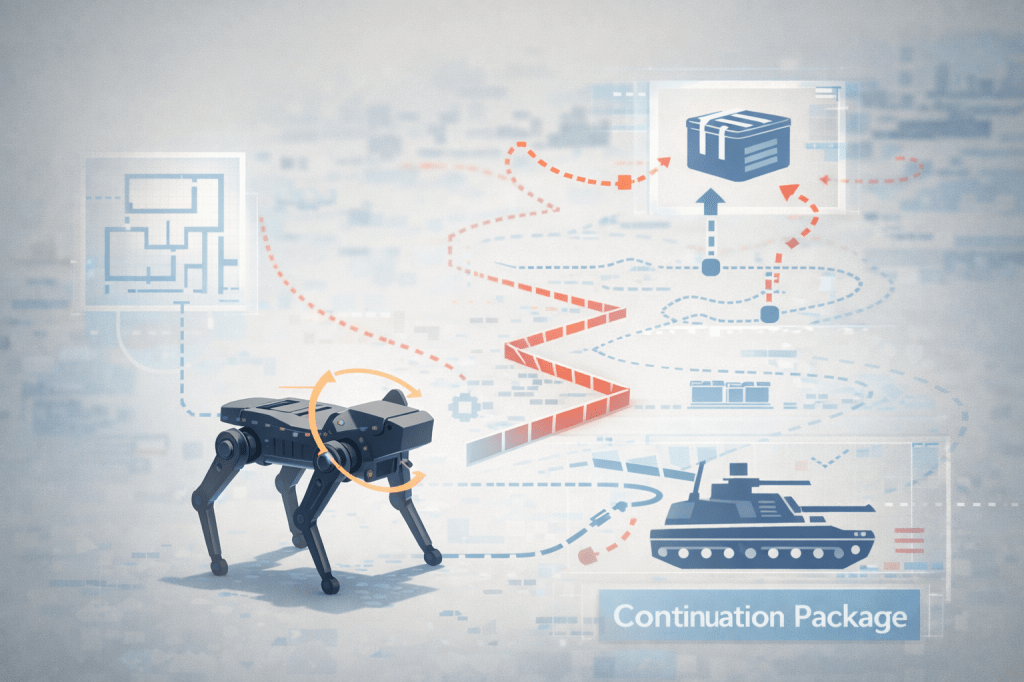
The Dog-Like Ground Drone: From Air to Ground, From Battles to Operations
Here is the core of the “update” reading.
Air drones often symbolize “seeing and striking from above.”
A dog-like ground drone implies something different:
moving into streets, trenches, interiors, and routines—the places air cannot fully control.
This is frequently framed as warfare turning into operational maintenance:
- persistent surveillance and patrol
- regular supply and delivery under threat
- automated presence that reduces human cost and increases endurance
- a conflict that behaves like a system: monitored, patched, optimized, repeated
In short, some claim the symbol points to war becoming less like a singular event and more like a managed infrastructure.
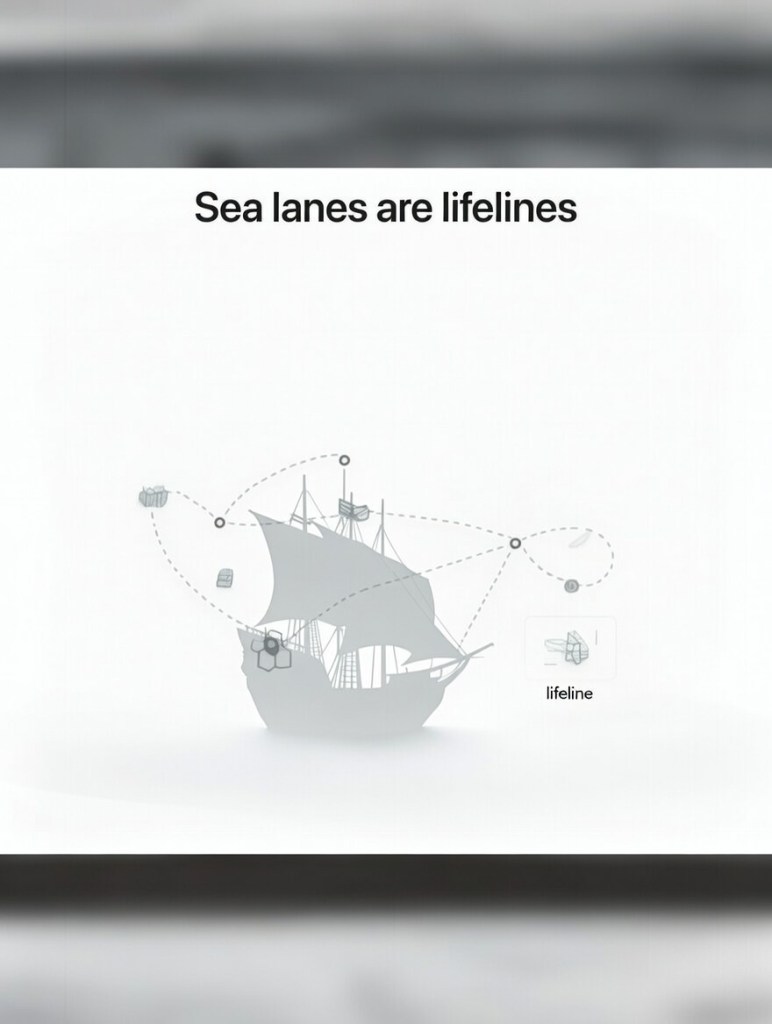
The Galleon: Why the Cover Chooses an “Old” Ship on Purpose
Why a galleon-like ship instead of a modern container ship?
Urban-legend readings tend to stack three meanings here:
1) Sea Lanes as Lifelines
The ship is often read as “route” rather than “vessel.”
Supply, trade, chokepoints, sanctions, and maritime pressure become part of the battlefield.
The old ship silhouette is a simple way to say: this is about lifelines.
2) Civilization Layers: War as a Story of Order
The classical feel can be interpreted as adding a “civilization layer”—
suggesting that conflicts are not only tactical, but also about the shape of order:
who controls passage, who sets rules, who defines legitimacy.
3) Past and Future on the Same Screen
A high-tech ground drone next to an old ship creates a deliberate contradiction:
technology accelerates, yet conflicts can feel like a return to older patterns.
Some claim that contrast is the message—progress in tools, regression in stability.
The Crew: Not Leisure, But Mobilization
In urban-legend framing, the crew does not signal peaceful sailing.
It is read as wartime labor:
rowing as forced momentum, lookout as constant vigilance, deck work as visible supply-chain tension.
When paired with tanks and drones, the ship’s crew becomes a metaphor:
war pulls society into a full-stack system—industry, routes, attention, maintenance.
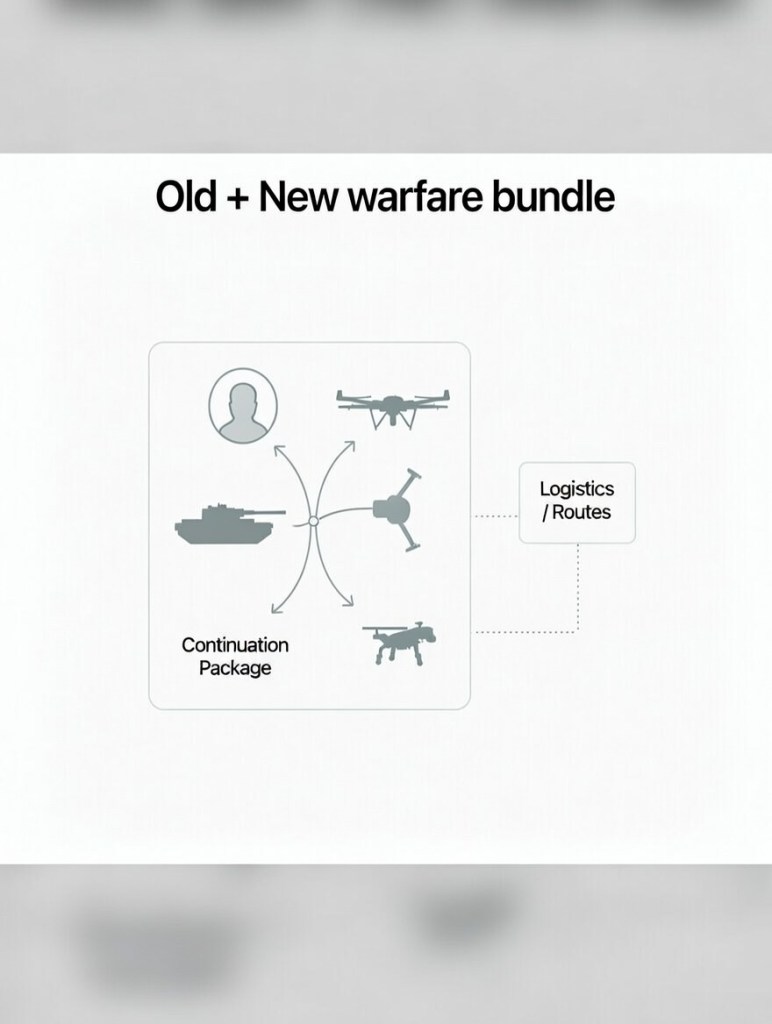
What the Top-Right Predicts—Or Rather, What It Normalizes
This quadrant is often summarized as one bundled thesis:
- a “face” that sustains the story
- old ground power that remains active
- new unmanned operations that make long-term endurance easier
- routes and logistics as the true lifeline
In urban-legend circles, the implication is not “a war begins” but “war becomes ongoing.”
Not a headline—an operating mode.
Why This Matters for the Whole Cover
If the top-right reads like an update panel, the entire cover shifts perspective.
It stops being a fortune-telling calendar and starts functioning like a conflict map:
a display of disputes, control layers, and price mechanisms that may define the year.
Next time—another fragment of truth to trace with you. I will return to the story.
A single question is enough: Who benefits?
 Share on X
 Share on Facebook
 Follow here
Follow @Kataribe_Iris
Follow here
Follow @Kataribe_Iris
📺 Visit the channel
💬 Open the LINE Store page

コメントを残す