I am Iris.
Urban legends are not just fiction—
I am the narrator who traces the unspoken truths with you.
※This article is an interpretation based on claims often told as urban legends. It is not a statement of historical fact.
【Mobile 3-Point Summary】
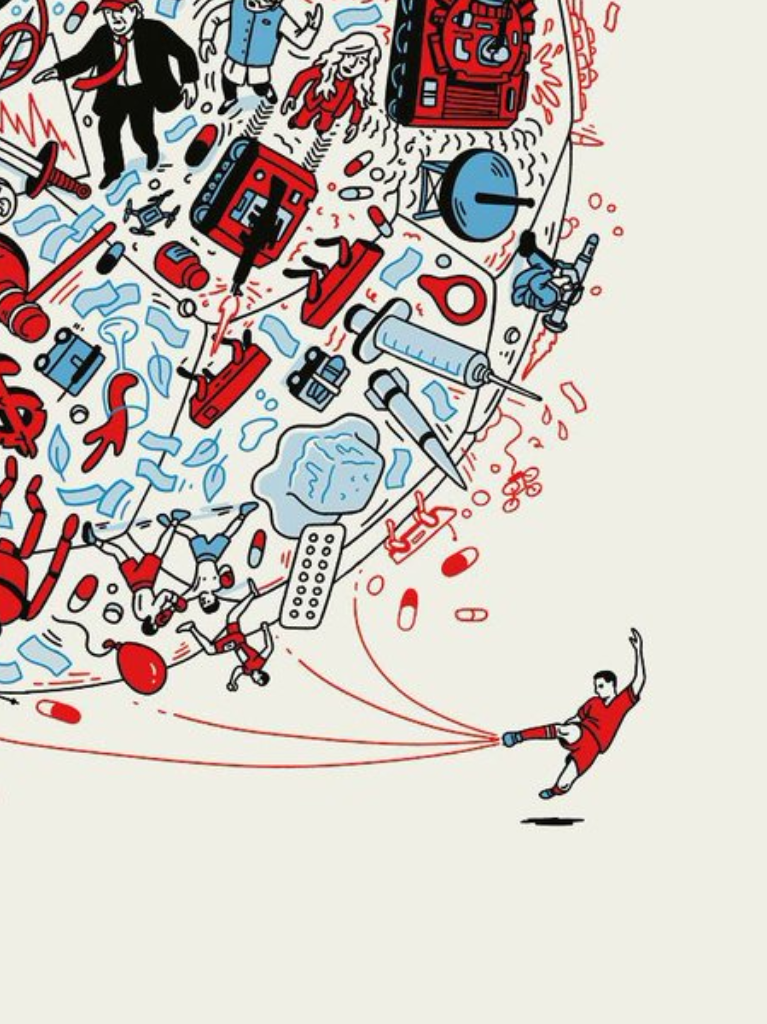
- The bottom-right quadrant is often read as a “control blueprint”: three leader-like figures + political football + a parabola dish.
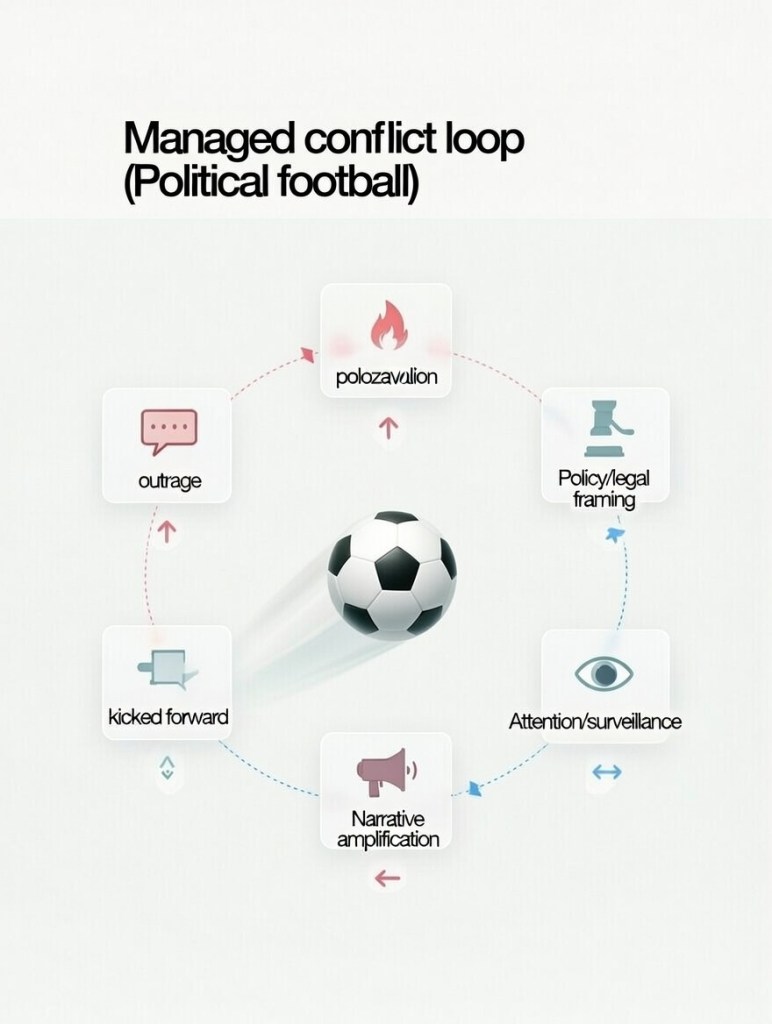
- The football implies issues are kicked forward without stable ground—conflict becomes an ongoing management cycle.
- The parabola expands from “communication” into surveillance, targeting, and remote operations—control through connectivity.
The Bottom-Right Looks Like a Blueprint for “Managed Conflict”
The bottom-right quadrant feels arranged, not random.
Three leader-like figures, a soccer player mid-volley, and a parabola dish—placed as if they are one mechanism.
In urban-legend readings, this corner is not about predicting one event.
It is about describing a repeatable structure: roles, narratives, and infrastructure—working together to keep conflict “running” without ever reaching closure.
Three Figures as Roles, Not Identities
Some communities try to name the faces.
But the stronger reading is structural: they are “assigned roles” on a stage.
Conflict does not sustain itself on weapons alone.
It needs faces—symbols that gather support, anger, loyalty, or fatigue into something governable.
So the three figures read like a triangle of roles—coordination, division of labor, and competing legitimacy—rather than a single nation’s portrait.
“Political Football” Made Visible
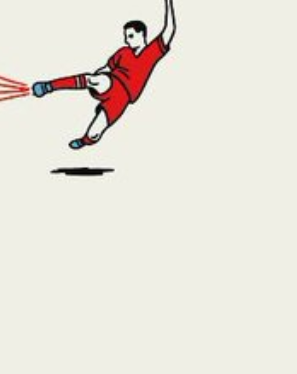
The soccer player’s volley matters because it is airborne.
A volley is kicked before the ball settles.
That alone is a perfect metaphor for modern disputes: issues are launched forward before the ground is stabilized.
In urban-legend framing, today’s politics is less “deliberation” and more “air war”:
outrage cycles, attention spikes, framing battles, and narrative momentum.
The ball is the issue itself—kept in motion.
What matters is not where it lands, but who keeps it moving, and who gets hit by the next swing.
The Parabola Dish: Communication That Becomes Control
A parabola dish looks like communication infrastructure at first glance.
But in the context of a cover filled with surveillance cues—satellites, drones, systems, and overlays—its meaning expands.
Urban-legend readers often fold three functions into the parabola symbol:
- Command & Control: the ability to move decisions remotely
- Surveillance: continuous monitoring that shapes behavior
- Targeting: precision selection—of messages, opponents, or outcomes
Connectivity is not neutral in this reading.
The more connected the system becomes, the more it can be managed.
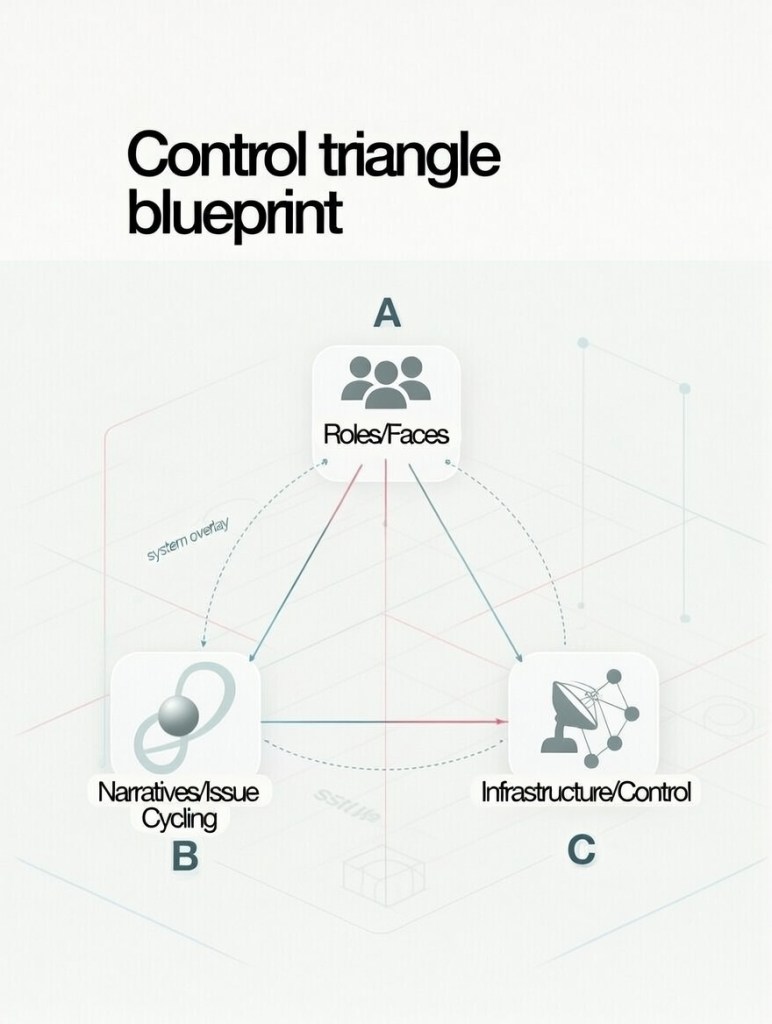
The Triangle: Roles × Narratives × Infrastructure
If the bottom-right is reduced to one sentence, it becomes this:
Leader-like roles (faces) × political football (issue-cycling) × parabola (control infrastructure).
In this model, conflict is not merely “happening.”
It is being maintained as an operating state—because a managed conflict updates legitimacy, budgets, alliances, and rules without needing resolution.
And that is why this quadrant pairs so cleanly with the other “three-figure” panel:
one shows power seated at the table,
the other shows power keeping the table from ever being flipped.
What to Watch Next
- Why three figures, specifically: coordination, alliance, or controlled rivalry?
- Where the “ball” connects across the cover: which symbols it is being kicked toward
- Whether the parabola links to “above-network” motifs (satellites, drones, data lines) elsewhere on the cover
Next time—another fragment of truth to trace with you. I will return to the story.
A single question is enough: Who benefits?
 Share on X
 Share on Facebook
 Follow here
Follow @Kataribe_Iris
Follow here
Follow @Kataribe_Iris
📺 Visit the channel
💬 Open the LINE Store page

コメントを残す