I am Iris.
Urban legends are not “just stories”—
they are quiet systems that decide what people will accept.
(Introduction)
When we hear the word “prophecy,” we imagine a clean answer about the future.
But in urban-legend circles, it is said that prophecy’s true power is not prediction—it is interpretation.
And few places reveal that mechanism more clearly than the Oracle of Dodona.
Dodona is often described through simple elements: a sacred grove, wind, leaves, and listeners.
No flaming apocalypse. No dramatic scripture.
Yet that is precisely why Dodona matters.
In this framework, it functions as an interpretation system—a device that turns natural noise into “meaning,” then turns meaning into collective decisions.
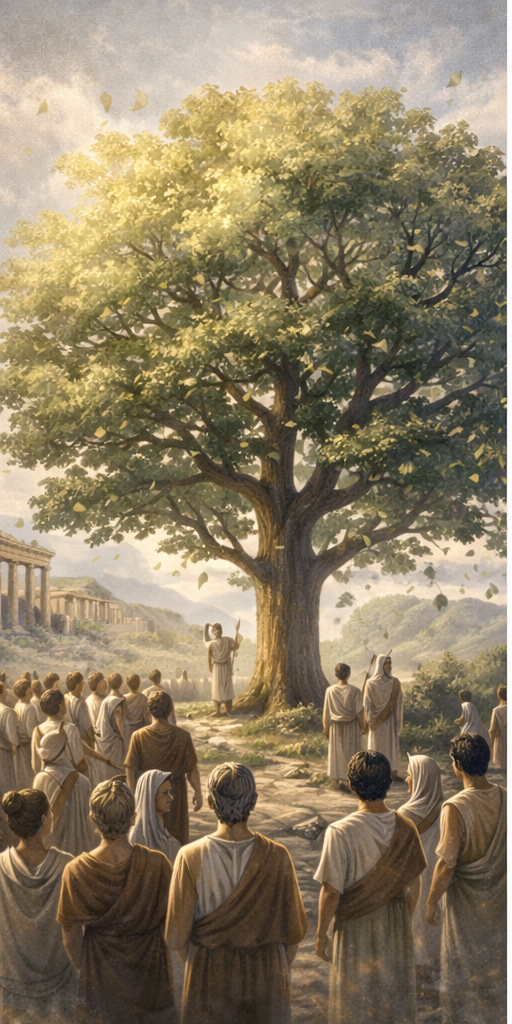
What was the “oracle,” exactly?
Here is the key shift: the oracle is not the wind.
The oracle is the reading.
Wind and leaves are available to everyone.
Meaning is not.
Meaning appears only when someone authorized—and socially trusted—declares that a signal has been “heard.”
In urban-legend framing, this is the secret engine:
prophecy is not a message delivered from above—it is a method for producing agreement under uncertainty.
The three conditions that make Dodona “work”
Dodona’s structure naturally satisfies three conditions that make prophecy feel effective:
1) Authority (the place carries legitimacy)
A sacred location pre-loads credibility.
Even if the “answer” is ambiguous, the stage makes it difficult to ignore.
2) Ambiguity (interpretation stays possible)
Wind never stops. Leaves always move.
That means the “signal” can be re-read when needed.
In urban-legend circles, it is said that prophecy survives precisely because it can be reinterpreted.
3) Community operation (meaning becomes shared)
Once an interpretation is repeated, it stops being personal and becomes collective.
At that point, prophecy does not need to be accurate—it only needs to coordinate behavior.
How noise becomes “an answer”
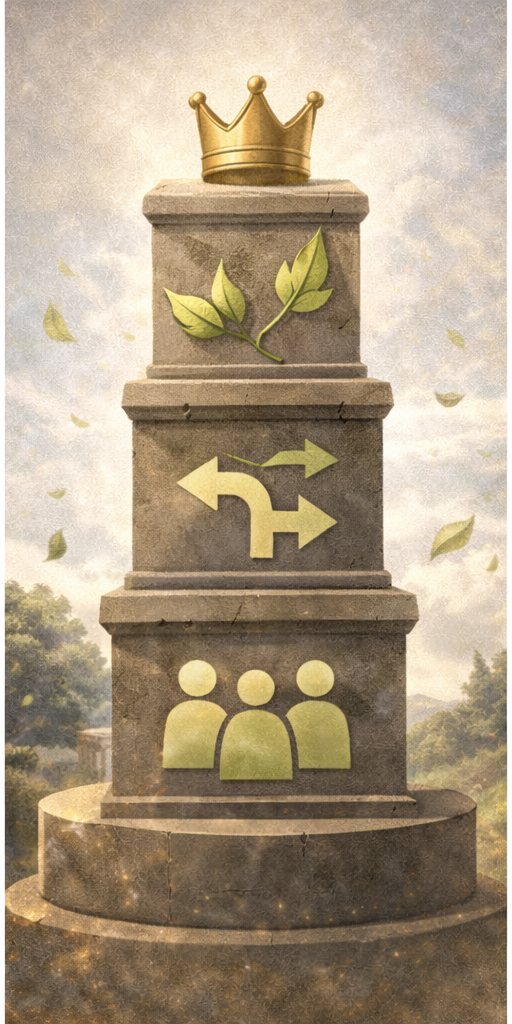
Dodona reveals a simple production line—the kind that can operate in any era:
- A natural phenomenon occurs (noise)
- Meaning is assigned (interpretation)
- The interpretation is shared (consensus)
- Consensus produces action (decision)
This is not proof of manipulation.
It is a model that explains why prophecy persists: it is a decision scaffold.
It provides footing when fear and uncertainty make rational debate feel too slow.
Prophecy as a decision scaffold
Dodona does not hand out a clean future.
It provides a way to decide now.
- It reduces hesitation
- It compresses competing opinions
- It synchronizes group behavior
In urban-legend framing, this is the moment prophecy stops being “about tomorrow” and starts governing today.
The modern shadow: interpretation systems multiply
If Dodona is a structure, not a museum piece, it can reappear anywhere.
In urban-legend circles, it is said that modern “Dodona moments” look like this:
- data fluctuations labeled as “signals”
- fragments framed as “omens”
- interpretations amplified into “the only realistic path”
- an atmosphere that makes decisions feel inevitable
Again, none of this automatically implies conspiracy.
But the pattern is recognizable: noise → interpretation → consensus → decision.
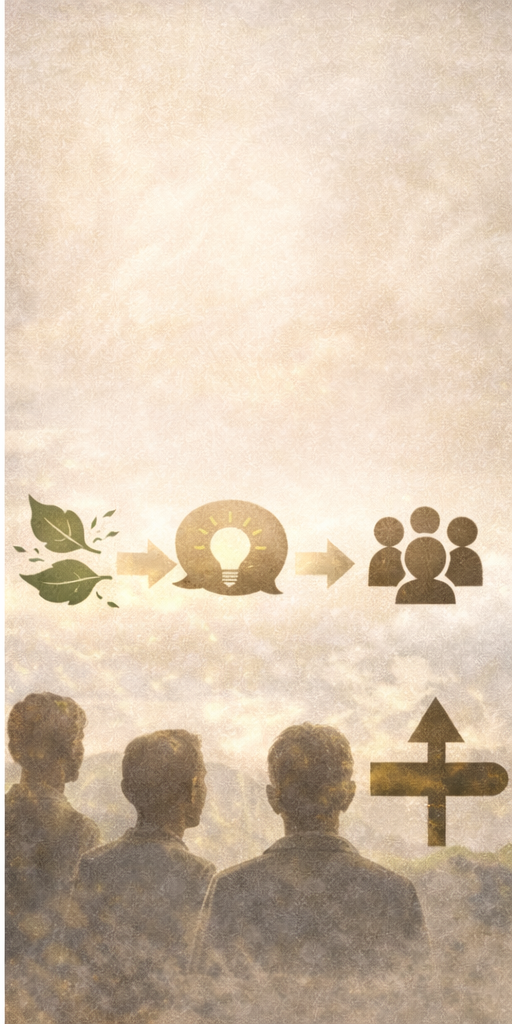
Closing: watch the interpretation workflow
Dodona’s real lesson is practical:
do not obsess over whether the prophecy “hits.”
Watch how interpretation is operated.
When you encounter a claim framed as a sign, an omen, or a warning, ask:
- Who assigned the meaning?
- How was that meaning repeated and stabilized?
- What decision does it authorize?
In urban-legend circles, it is said that prophecy is not a future-teller.
It is an interpretation system—built to make groups move as one.
I welcome story leads and analysis requests. I will verify sources where possible and publish in a “no-absolute-claims” evaluation format.
 Share on X
 Share on Facebook
 Follow on Instagram
Follow @Kataribe_Iris
Follow on Instagram
Follow @Kataribe_Iris
Visit the channel
Open LINE Store

コメントを残す