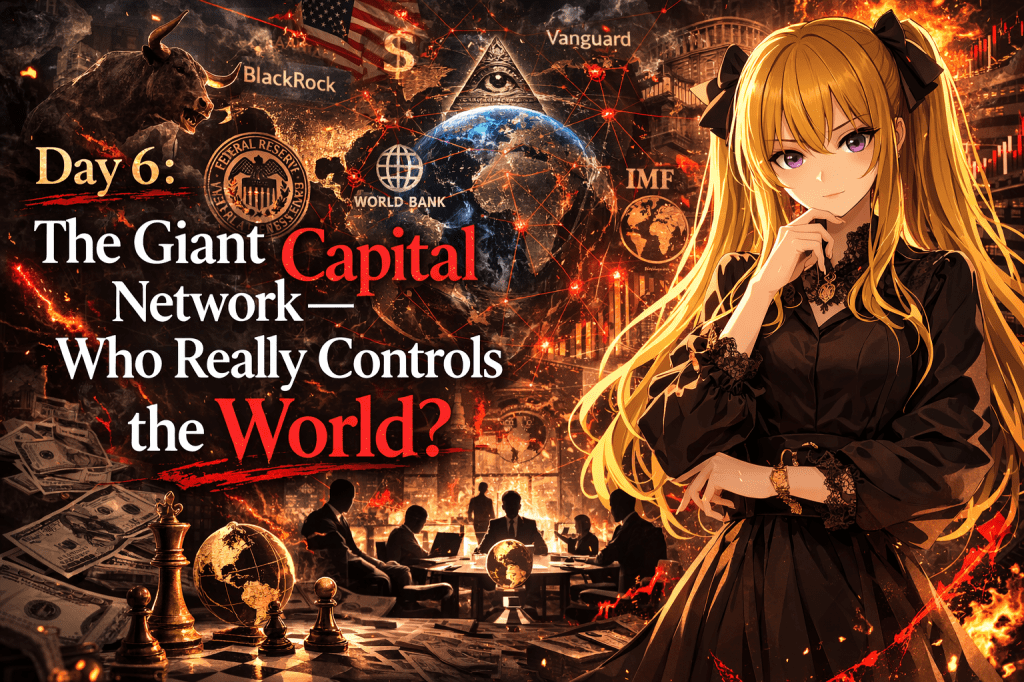
I am Iris.
Urban legends are not mere fabrications—
I am the storyteller who traces the unspoken truths with you.
(3-line summary)
- As chokepoint narratives grow larger, they often begin to invoke giant capital, financial networks, and elite influence.
- In urban-legend circles, this can become a claim that instability is not merely used, but quietly directed.
- Today, we separate symbolic accusation from the structural reasons these names keep appearing.
Why large names enter the story
When the public confronts a system that feels too complex, it often seeks compression.
Shipping networks, energy exposure, hedging behavior, financial repricing, insurance changes, and capital concentration are difficult to hold in the mind all at once.
So complexity gets condensed into a handful of powerful names.
That is why giant capital and financial elites appear so often in these conversations.
They function as symbols of scale, reach, and influence.
In urban-legend circles, those symbols quickly become villains.
But symbolism is not proof.
Before assigning intent, we should ask what structural features make those names feel plausible to so many observers.
Capital concentration and control are not the same thing
This is one of the most important distinctions in the entire series.
Large-scale capital concentration is real.
Broad asset exposure, global investment reach, and significant market presence are also real.
But from there, some narratives make a further jump:
if capital is large, then all disruption must be directed by it.
That conclusion does not follow automatically.
Influence is not identical to orchestration.
Scale is not identical to secret authorship.
This does not mean the question is foolish.
It means the structure must be read carefully.
Why chokepoint fear naturally leads people toward elite narratives
Chokepoint stories often produce three effects at once.
- Visible vulnerability
- Large-scale repricing
- Uneven benefit distribution
Once those three appear together, people begin searching for actors large enough to matter.
That search is understandable.
A narrow passage affects a wide system, and a wide system usually involves large pools of capital.
So giant financial actors begin to appear in the narrative almost automatically.
In urban-legend circles, this often becomes the language of hidden management.
That reading may exceed what evidence can support.
But the psychological pathway toward it is easy to understand.
Why “financial elites” is both useful and dangerous language
The phrase “financial elites” feels satisfying because it turns an abstract system into a visible category.
It gives shape to something otherwise diffuse.
But that same convenience makes it risky.
- It can become too vague
- It can blur evidence and resentment
- It can turn structural power into totalized myth
- It can encourage certainty where caution is needed
This is why I treat the phrase carefully.
It may describe a perception of concentrated influence, but it can also conceal analytical laziness.
The better approach is to ask:
What kind of market structure makes such suspicions repeatedly emerge?
What Day 6 teaches us
Giant capital and financial elites are mentioned so often because chokepoint stories touch money, scale, influence, and asymmetry all at once.
That is the structural core.
In urban-legend circles, this is often transformed into direct claims of hidden command.
Those claims may go beyond what can safely be established.
But the recurring association itself tells us something important: people sense that concentrated systems of finance can appear inseparable from concentrated systems of risk.
So the lesson is not that every elite narrative is true.
The lesson is that capital concentration, crisis visibility, and unequal advantage create a setting in which elite narratives become almost inevitable.
Next time, we close the series.
We will gather the structure into one final framework: a chokepoints and power-structure checklist.
Next time—another fragment of truth we will trace together.
I will return to continue the telling.
Send topics you want us to analyze. We verify primary information where possible and write in a “no absolute claims” framework.

コメントを残す